
What Happened After the Largest Layoff in NC History
Clip: 11/7/2026 | 8m 16sVideo has Closed Captions
Kannapolis lost 4,000 jobs in a day. 20 years later, is the comeback real?
In 2003, Kannapolis lost more jobs in one day than any city in North Carolina ever had. The mill was gone and downtown went with it. Twenty years later, the city looks nothing like it did. We visited to find out what it took to revitalize the area and what is still missing.
Problems playing video? | Closed Captioning Feedback
Problems playing video? | Closed Captioning Feedback
ncIMPACT is a local public television program presented by PBS NC
What Happened After the Largest Layoff in NC History
Clip: 11/7/2026 | 8m 16sVideo has Closed Captions
In 2003, Kannapolis lost more jobs in one day than any city in North Carolina ever had. The mill was gone and downtown went with it. Twenty years later, the city looks nothing like it did. We visited to find out what it took to revitalize the area and what is still missing.
Problems playing video? | Closed Captioning Feedback
Where to Watch ncIMPACT
ncIMPACT is available to stream on pbs.org and the PBS app.
Providing Support for PBS.org
Learn Moreabout PBS online sponsorshipIn 2003, Kannapolis lost more jobs in one day than any city ever had in North Carolina.
- This has been a devastating blow to the city of Kannapolis into this entire area.
More than 4,000 textile workers lost their jobs when the city's biggest employer shut down.
20 years later, the city looks completely different, but whether it actually recovered, that's a harder question.
We're here to find out.
I'm Melody Hunter Pylian.
This is NC Impact.
David Dill owns West Loop Local, a bar and restaurant on West Avenue in downtown Kannapolis.
He also runs the Kannapolis location of Sabor Latin Street Grill, a few doors down.
Both businesses are short walk to Atrium Health Ball Park, home of the Cannonballers.
- They built a beautiful facility that draws people not just during baseball season, but draws people here year round with event schedules, meetings and such.
It's been a real boon for the community.
- The ball park sits on the site of the former Cannon Mills across the street, a research campus, along the sidewalks, new apartment buildings going up.
David brags about this place now, the hometown he ran from at age 18.
- It's like I'm getting out of here as soon as I can, try to make it.
You know, went off to college, moved into the Charlotte area and found work there.
You know, it was definitely when I looked at my future, I didn't see Kannapolis in it at that point in time.
- But Kannapolis and the mill that created it was a big part of David's past.
Generations of his family and thousands of other families worked at Cannon Mills, which opened in 1908.
- Anybody that grew up in Kannapolis knew somebody that worked in the mill.
Both of my parents did.
My mother worked in the offices.
My father worked on machinery, repair and things of that.
- From 1908 until 2003, the mill was the town.
800 acres across two counties.
Cannon built 1,600 houses for its workers and a hospital.
Then it closed.
Downtown didn't take long to follow.
- You come down here and windows are boarded up, marquees are dark.
You know, it has an abandoned feel to it.
- But what Kannapolis lost that day wasn't just jobs.
It was everything the mill did for this town.
- It was a shock to us on the council.
And it was also a shock to all the other elected appointed officials in the community that depended upon this mill.
They were absolutely shocked at 4,000 plus people got laid off in one day.
And they dreamed that somebody was going to come in and pick up the pieces and go back into business here and all of them were going to go back to work again.
Sadly, that didn't happen.
- The mill sat empty, turning Kannapolis into a ghost of itself.
David Murdock had owned Cannon Mills once before.
Mill and Downtown both.
He sold the mill in 1985 but kept downtown.
And he'd held on to it ever since.
Then in December 2004, he bought the mill site back and announced plans to demolish it.
- I can remember on the day that everything had been removed except the two smoke stacks that were left on all sides here.
When they were going to demolish the two smoke stacks, there was hundreds of people standing there watching.
Tears dripping off their chin saying, "I'm just so sad it's finally going away."
- When the mill died, downtown businesses withered.
Just six businesses survived from the 100 plus that was here when the mill was active.
- But Murdock didn't just tear the mill down.
He had a plan for what came next.
Murdock's wife had died young.
He believed nutrition had something to do with it.
So he decided to build a research campus on the ground where the mill used to be.
- He said, "I'm invested in my whole estate in developing this campus.
And this was a godsend."
- In 2008, the North Carolina Research Campus opened.
University signed on and researchers moved in.
The NC Research Campus hosts nine academic institutions.
Among them, UNC, NC State, North Carolina A&T, North Carolina Central Duke, and Rowan Caber's Community College.
Nutrition and food technology companies like General Mills also conduct a research here.
- It's probably about 300 or so researchers and graduate students, other staff working there.
Certainly has the capacity to be much higher than that.
- For these new workers, Kannapolis did not have the amenities you see today.
In 2015, downtown offered little to no restaurants, entertainment, shopping, or housing choices.
Only AD came downtown.
- All of our downtown buildings, a lot of boarded up buildings.
Just wasn't a great look.
And it wasn't sending the right signal to the universities, to the university researchers.
This is a place that you really want to be a part of.
- The campus had brought scientists to Kannapolis.
There was nowhere for them to eat dinner.
So around 2015, Kannapolis bought its own downtown from Murdoch.
- Now that you buy it, you're sort of like the dog you chase is the bus, and now you got it what you do with it.
And so we said, "We need a plan."
The plan called for them to start with something people wouldn't even see.
All the infrastructure was bad.
It was all worn out, broken, terracotta pipes that were put in during the war and didn't have metal pipes to put in.
So we needed to revitalize our infrastructure.
We put a fence up around downtown for two years.
And it was the longest two years of my life.
The plan also called for creating anchors that drive people to downtown, including the ballpark.
Atrium Health Ballpark that we're sitting in now, this was the anchor and this was the catalyst for everything.
- Legg estimates the ballpark draws close to half a million people a year, counting baseball and everything else.
- At this point, we have about 1.3 million people coming to our downtown in a year.
That is a huge jump from where we used to be.
I'd say around 2021 that number was a little bit under a million, so we've increased, you know, almost 40% since then in the last five years.
- The ballpark worked.
Nobody knew yet if people would spend money anywhere else in downtown.
In 2021, Deal signed a lease when almost nobody else was opening a restaurant here.
- You could tangibly feel the effort that went around it and it was pretty easy to get swept back up in.
- Downtown is filling up about 90% capacity and many businesses are locally owned with downtown residents to support them.
Downtown have come back to life at night.
What happened there during the day was a different story.
Kannapolis is not a county seat, so there's no courthouse, no county offices and downtown also lacks much office space.
It's the one piece of the plan they haven't gotten.
The research campus has a similar problem.
They just can't fix it in the same way.
- But a lot of vacant land still left that are owned by different parties.
So we don't have as much control there.
- Despite the challenges, other communities have started calling Kannapolis City leaders for their advice.
- It really is critical for other communities to know that they can do it too.
It won't be easy.
We had to make a lot of hard decisions.
- Darrell Hinnant started at Cannon Mills in 1975.
He was still there 28 years later the day it closed.
Since then, the city got his downtown back.
What happens next is still up to them.
For ncIMPACT, I'm Melody Hunter-Pillion.
[Music]

Inside the NC County That Replaced Tobacco with Vineyards
Video has Closed Captions
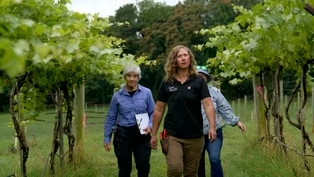
When the tobacco industry collapsed, a community college decided the land could grow wine grapes. (7m 15s)

How a Dead Railroad Became This Small Town’s Best Asset
Video has Closed Captions
A closed paper mill left 19 miles of railroad behind. It is now a trail. (8m 15s)
Preview | When the Economy Changes
Video has Closed Captions
Dozens of NC towns lost their biggest employer. These three did something with what was left. (20s)
Providing Support for PBS.org
Learn Moreabout PBS online sponsorship New Episode
- News and Public Affairs

Top journalists deliver compelling original analysis of the hour's headlines.
 New Episode
- News and Public Affairs

Today's top journalists discuss Washington's current political events and public affairs.
 New Episode

 New Episode
 New Episode
 New Episode
 New Episode

 New Episode



 New Episode
Support for PBS provided by:
ncIMPACT is a local public television program presented by PBS NC