
How a Dead Railroad Became This Small Town’s Best Asset
Clip: 11/10/2026 | 8m 15sVideo has Closed Captions
A closed paper mill left 19 miles of railroad behind. It is now a trail.
When the Ecusta Paper Mill closed in 2003, the rail line that had served manufacturers across Henderson and Transylvania counties for a century had no reason to run. Residents spent nearly 15 years fighting to turn it into a trail, using a federal designation called railbanking to buy and preserve the corridor. Six of the 19 miles are now open.
Problems playing video? | Closed Captioning Feedback
Problems playing video? | Closed Captioning Feedback
ncIMPACT is a local public television program presented by PBS NC
How a Dead Railroad Became This Small Town’s Best Asset
Clip: 11/10/2026 | 8m 15sVideo has Closed Captions
When the Ecusta Paper Mill closed in 2003, the rail line that had served manufacturers across Henderson and Transylvania counties for a century had no reason to run. Residents spent nearly 15 years fighting to turn it into a trail, using a federal designation called railbanking to buy and preserve the corridor. Six of the 19 miles are now open.
Problems playing video? | Closed Captioning Feedback
Where to Watch ncIMPACT
ncIMPACT is available to stream on pbs.org and the PBS app.
Providing Support for PBS.org
Learn Moreabout PBS online sponsorship- North Carolina has thousands of miles of dead railroad sitting dormant across the state.
A community in Western North Carolina is turning one abandoned corridor into an economic engine, and towns across the state are starting to fight over the ones that are left.
But can a dead railroad actually bring an economy back?
I'm Melody Hunter-Pillion.
This is "NC Impact".
[suspenseful music] [crowd cheering] Families with baby strollers, joggers, cyclists, and walkers have replaced trains on this rail corridor in Hendersonville.
New businesses and old factories and former freight houses line the vacated tracks.
[machine whirring] - We see a lot of walkers, of course, lots and lots of bicycles, a lot of electric bikes.
Oh my goodness.
- [Melody] Lori Rodriguez and her two daughters own Southern Streams Coffee House.
It's a popular stop along the first six miles of the Ecusta Trail, running from downtown Hendersonville west to Horseshoe.
- On the weekends especially, we'll see families that maybe grandma grandpa's in town or grandma grandpa are having their kids come from out of town and we're seeing like big groups of families walking the trail, which is really neat.
- [Melody] The Rodriguez family installed bike racks outside for trail users.
They transformed the interior spaces of a former industrial warehouse into nooks where customers visit, lounge, and work on their laptops.
But when Lori opened the coffee house doors in 2023, the Ecusta Trail was still in the works with an uncertain timeline for opening and bringing in business.
- People were just waiting for that time when the trigger was going to be pulled.
[machine whirring] - [Melody] About one mile east on the trail, Robert Gunn at Ecusta Market & Cafe also waited and worried.
He banked his business on the rail trail.
- In the back of my mind, I mean, there was always a question of is this actually going to happen?
- [Melody] But the trail didn't happen overnight and it almost didn't happen at all.
- It took almost 15 years of conversations and political momentum that grew out of the citizens to get where we are today.
- [Melody] For more than a century, the rail line delivered goods to manufacturers across Henderson County and Transylvania County.
When the mills closed, so did the railroad.
- Over time, the users of that rail line declined.
And then in 2003, the Ecusta Paper Mill, which was the last real user, which was located in Transylvania County closed their doors leading to really not a whole lot of any use by the rail line or any sort of commercial enterprise on the trail.
- [Melody] The unused rails felt like a dead end for residents.
They wanted a plan and a new economic path after the Ecusta Paper Mill closed.
- A group of individuals from both counties, it crosses into two counties, Henderson and Transylvania, got together in the late, before 2010, and started talking about, "Hey, this trail, it doesn't look like any other industry's coming.
This could be a great rail trail."
- A group of residents from both counties formed Friends of the Ecusta Trail and pushed the county to act.
What were some of the bumps in the road, would you say, that your organization learned that you could teach others so that, if they're thinking the same thing, maybe the path will be easier?
- The first bump in the road is the railroad, getting the railroad to agree to a rail bank.
There's a process.
- [Melody] The key was something called rail banking, a federal designation that kept the corridor intact and opened the door for a trail.
- And that was the whole purpose of the law, was to actually preserve those rail corridors into the future.
So, we are the owner of that rail line today.
- [Melody] Henderson County holds a remaining 147 years on the corridor lease.
The County Tourism Development Authority, along with state and US lawmakers, helped secure grants, all of which took time.
And for the businesses already banking on the trail, waiting had a price.
Robert Gunn was one of the first to bet on the success of the trail.
He refurbished a building at the old Lennox Station, choosing the location specifically for the trail.
He didn't expect to have to wait.
- We knew the trail was coming, or the trail was open.
I remember sitting in that market at the counter.
It was just me sometimes the whole day.
I was the only employee, we had cut back hours, because it was just not busy enough.
- [Melody] But then the trail opened in July 2025.
[crowd cheering] - When that pavement hit the trail, I think, they actually paved it maybe a week before the official opening.
As soon as there was even like a mile of pavement, people just jumped on it.
They were just on it all day.
- [Melody] Gunn says the trail turned business around for Ecusta Market & Cafe.
They now employ 40 people.
- We though it was going to be more of a mom and pop, like 15, 20 employees maybe.
And as we opened everything and realized how many people it took to run it, I mean, it's a big thing.
Like we have, you know, there's multiple families that live in Hendersonville that this is their way they support their family.
- The harder question is what kind of economy this actually builds.
Will it be able to replace the economy that was there before with industry?
- It will replace things, but it will be different, right?
The type of work is going to be different.
The type of investment's going to be different.
But I think what we're already seeing today is that we're driving an economy that is through tourism and through more of a commercial style development rather than an industrial development.
- [Melody] Location is part of the pitch.
Hendersonville sits well inside the day-trip radius for several major cities.
- Now, that we have the trail, of course, we are getting tourism from really all over.
I mean, I meet people all the time from people coming from Greenville, Charlotte to talk to a family from Georgia, they came specifically to ride the trail.
You know, like it's a draw for sure.
- [Melody] The trail is also pulling people across town into neighborhoods they hadn't visited before.
- We've heard a lot of people really excited when they see there's a coffee shop here that they hadn't known that we were here before.
And I think, a lot of the people from the other side of town that's coming to this side of town now, you know, they're discovering some things that they didn't know that Hendersonville necessarily had.
- [Melody] Beyond the economy, Robert says the trail is changing how people in Hendersonville live.
- This is the social hub, but part of their socializing is now being outside moving their body.
People meet here, go on walks together.
- [Melody] Six miles of the trail are complete, but the communities that sit along the other 13 miles of the trail are still waiting.
From Horseshoe, the trail continues west for 13 more miles through neighborhoods, shopping areas, parks, and farmland ending in Brevard.
Henderson County is finishing its five remaining miles with state DOT.
The completion date is projected for 2029.
With many miles of dead tracks in North Carolina and the need for economic boost, Lynn Huffman reminds other communities that turning rails to trails takes perseverance.
- That's probably the most important thing, and open communication.
- [Melody] The trail may never match what the old mills employed, but it's building a different case for Henderson County's economy.
- So, I think, that in its own way, the trail could be a driver for bringing in maybe not a massive manufacturer, but some of the smaller companies, because it's the way of life here is so nice.
- [Melody] In Henderson County, the railroad stopped running decades ago.
What's moving on that land now is slower, quieter, and still being figured out.
I'm Melody Hunter-Pillion for "NC Impact".
[gentle upbeat music]

Inside the NC County That Replaced Tobacco with Vineyards
Video has Closed Captions
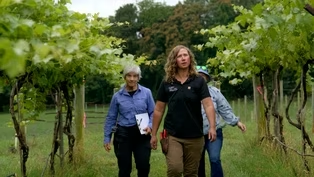
When the tobacco industry collapsed, a community college decided the land could grow wine grapes. (7m 15s)

What Happened After the Largest Layoff in NC History
Video has Closed Captions
Kannapolis lost 4,000 jobs in a day. 20 years later, is the comeback real? (8m 16s)
Preview | When the Economy Changes
Video has Closed Captions
Dozens of NC towns lost their biggest employer. These three did something with what was left. (20s)
Providing Support for PBS.org
Learn Moreabout PBS online sponsorship New Episode
- News and Public Affairs

Top journalists deliver compelling original analysis of the hour's headlines.
 New Episode
- News and Public Affairs

Today's top journalists discuss Washington's current political events and public affairs.
 New Episode

 New Episode
 New Episode
 New Episode
 New Episode

 New Episode



 New Episode
Support for PBS provided by:
ncIMPACT is a local public television program presented by PBS NC