
How Guilford County Cut Repeat 911 Calls by 99%
Clip: 11/3/2026 | 7m 23sVideo has Closed Captions
A Guilford County pilot program cut 911 calls from its most frequent callers by 99%.
Guilford County answers about 100,000 emergency calls a year, and some of the most frequent calls do not require an ambulance response. People call 911 in a crisis because it is the number they know. The county paired EMS with social services and started sending a social worker instead. Over one month, one group of callers went from 440 calls to four.
Problems playing video? | Closed Captioning Feedback
Problems playing video? | Closed Captioning Feedback
ncIMPACT is a local public television program presented by PBS NC
How Guilford County Cut Repeat 911 Calls by 99%
Clip: 11/3/2026 | 7m 23sVideo has Closed Captions
Guilford County answers about 100,000 emergency calls a year, and some of the most frequent calls do not require an ambulance response. People call 911 in a crisis because it is the number they know. The county paired EMS with social services and started sending a social worker instead. Over one month, one group of callers went from 440 calls to four.
Problems playing video? | Closed Captioning Feedback
Where to Watch ncIMPACT
ncIMPACT is available to stream on pbs.org and the PBS app.
Providing Support for PBS.org
Learn Moreabout PBS online sponsorship- Several people here in Guilford County were calling 911 several times a month, not because they were in crisis, but simply because they needed help and they had nowhere else to call.
[siren wailing] [gentle bright music] The county answers about 100,000 calls a year, some of them dispatchers say were never a job for an ambulance.
So the county tried something different.
Instead of sending another ambulance, it started sending a social worker.
Two years in, the county says it's changed how hundreds of people experience an emergency.
We ride along with those social workers and talk to the people who used to make those calls in order to see how this program works.
I'm David Hurst, This is "NC Impact."
[bright upbeat music] Judith Perl spent years taking care of her husband at home.
As his health declined, the falls started coming more often.
- My husband used to outweigh me by 200 pounds, and I was a lot skinnier then.
- So you couldn't help him?
- No.
- [David] They didn't have family nearby.
So when he fell, there was one number that would always send somebody.
- [Operator] 911, what's your emergency?
- [David] Stories like Judith's were pretty common in Guilford County.
Scott Muthersbaugh spent years in the field, so he knows those calls well.
[traffic whirring] - We had those addresses that you could kind of recite in your sleep.
You knew the folks that would call routinely, not because they had chronic medical issues, but just because they didn't have another resource to be able to call.
[indistinct radio chatter] - [David] Some of those callers were dialing 911 100 times a month.
- We had some folks when I was in the field that would call just because they were hungry or they needed assistance out of bed or up the stairs or something like that.
A lot of times with the older populations or with folks that just don't have somebody else to call, EMS has served as the social safety net for a very long time.
And just because we are the only resource for a period of time doesn't mean that we're the best resource.
[siren wailing] - An ambulance could get Judith's husband off the floor, it couldn't stop him from falling again.
What most people don't see is what's behind every one of those calls.
What is the resource strain when having to respond to these kind of calls?
- A traditional 911 response in our system often involves multi-agency.
So that oftentimes is a fire truck, an ambulance, perhaps a supervisor, and a police officer.
And one of the things that we identified, particularly coming out of the pandemic is, we simply didn't have the resources to respond to non-medical needs with that type of public safety response.
[flags fluttering] - [David] Before the county could change the response, it had to understand why 911 had become the number of people called.
- One of the things that we identified is that when someone was imbalanced, either social, psychological, physical, or spiritual, then they oftentimes picked up 911 because that's what they knew to call when they had a crisis.
And what we realized is, we needed to respond in a different way.
- [Dispatch] ETA of about 10 minutes.
- [David] It's easy to hear 100 calls a month and assume somebody's taking advantage of the system.
But Guilford County found something else, people were calling because something was actually wrong.
It's just not the kind of wrong that first responders are designed to fix.
- Many of the patients that we responded to did not have adequate care or support for them.
They often didn't have someone to advocate for their care.
They may not have eligibility for benefits.
And oftentimes, we saw that they didn't have durable medical equipment in their home, perhaps physical therapy or occupational therapy, that could allow them to continue to live independently.
- [David] So the county tried something else.
- How are you?
- I'm doing well.
So what seems to be going on today?
What problems are you having?
- EMS partnered with the county's Department of Social Services and its Family Justice Center.
They call it the Adult Resource Team, or ART for short.
The team is three social workers and a supervisor, all housed inside the Guilford County EMS office.
The county started small with a 90 day proof of concept.
Over one month, 34 people called 911 more than 440 times.
After the team reached them, that same group only called four times.
That's about a 99% drop.
Sherry Stinson supervises the ART team, she was the first one hired.
Once you stepped into the role, how great was the need once you started meeting with these folks?
- One of the things I noticed is, we had this big gap in services between our elderly population more so than any other population.
And when I saw that, that was very surprising to me because the elderly population is a vulnerable population.
And once I saw that gap, I understood that people need it more.
- She found the needs were specific, and they were different every time.
What has the impact been?
Have you been able to experience some success stories?
- Yes, we've had a lot of success stories.
We've been able to help people move from a top floor apartment to a bottom floor apartment because they no longer could live in that situation due to their disabilities.
We've helped people move from this state here in North Carolina to Cleveland, because we didn't actually have the services that they needed here.
And we were able to connect with them and get them to a service that would benefit them and help them live healthier lives.
- [David] But Stinson says sometimes the hard part isn't finding out what somebody needs, it's finding somewhere to send them.
[office workers chat indisticntly] - We have improved over the years, but what you see is, there are things that when people fall between the cracks.
So they qualify for this, but they may not qualify for that, so they are not able to be in that program.
And that's a challenging thing because that makes us have to step outside the box and figure something out.
[siren wailing] - [David] Albright says the other concern is funding.
When an ambulance takes someone to the hospital, EMS can send a bill.
That's how emergency services pays for itself.
The ER team gets paid differently.
Some through Medicaid, some through federal grant money, and the rest comes out of the county budget.
- EMS is really paid as a transportation benefit.
So a lot of times the work that we do in the assessment and referral doesn't have the same level of reimbursement.
We've been very fortunate that Guilford County has supported this program.
- So it requires buy-in from local community leaders?
- It absolutely requires buy-in, both of management and leadership of the county.
- [David] So far, the county has kept funding the program.
Judith Perl is one of the people the team reached.
The team met with her and worked out what she needed.
It turned out to be a long-term care facility and they helped her and her husband get there.
- They came from nowhere, and they found this place for me.
- Where do you think you would be?
What would it look like if they hadn't come into your life?
[bright upbeat music] - They were necessary.
- [David] Judith Perl has someone to call now.
The harder part is reaching the people who still don't know anyone but 911.
For "NC Impact," I'm David Hurst.

This NC County Started Testing the Drugs—Deaths Fell by Half
Video has Closed Captions
Testing the drug supply changed how one NC county responds to overdose calls. (7m 23s)

The NC City That Stopped Sending Police to Minor Car Crashes
Video has Closed Captions
Wilmington, NC, has sent civilians instead of officers to minor crashes since 2007. (7m 28s)
Video has Closed Captions
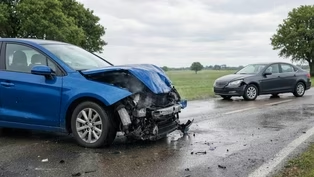
Not every 911 call needs a badge or a siren. Three NC counties are changing who shows up. (20s)
Providing Support for PBS.org
Learn Moreabout PBS online sponsorship New Episode
- News and Public Affairs

Top journalists deliver compelling original analysis of the hour's headlines.
 New Episode
- News and Public Affairs

Today's top journalists discuss Washington's current political events and public affairs.
 New Episode
 New Episode


 New Episode
 New Episode



 New Episode

 New Episode
Support for PBS provided by:
ncIMPACT is a local public television program presented by PBS NC